What is Intersectionality?
According to Patricia Hill Collins and Sirma Bilge (2016), intersectionality is "a way of understanding and analyzing the complexity in the world, in people, and in human experiences. The events and conditions of social and political life and the self can seldom be understood as shaped by one factor. They are generally shaped by many factors in diverse and mutually influencing ways. When it comes to social inequality, people's lives and the organization of power in a given society are better understood as being shaped not by a single axis of social division, be it race or gender or class, but by many axes that work together and influence each other."
The ways that various axes of identity overlap and influence each other in relation to social inequality is a very important component of this definition. It is difficult to deny the fact that social inequality exists within our world. For example, according to the US Census, while household income has slowly increased over the past 6 decades for all Americans, median household income, as of 2025, is still clearly and drastically divided along racial lines. Another example is educational disparities. According to the US Department of Treasury, Hispanic households have the lowest high school completion rates, followed by those under the category of "American Indian/Alaska Native", with indivduals who are categories as White and "Two or more races" competing at the top.
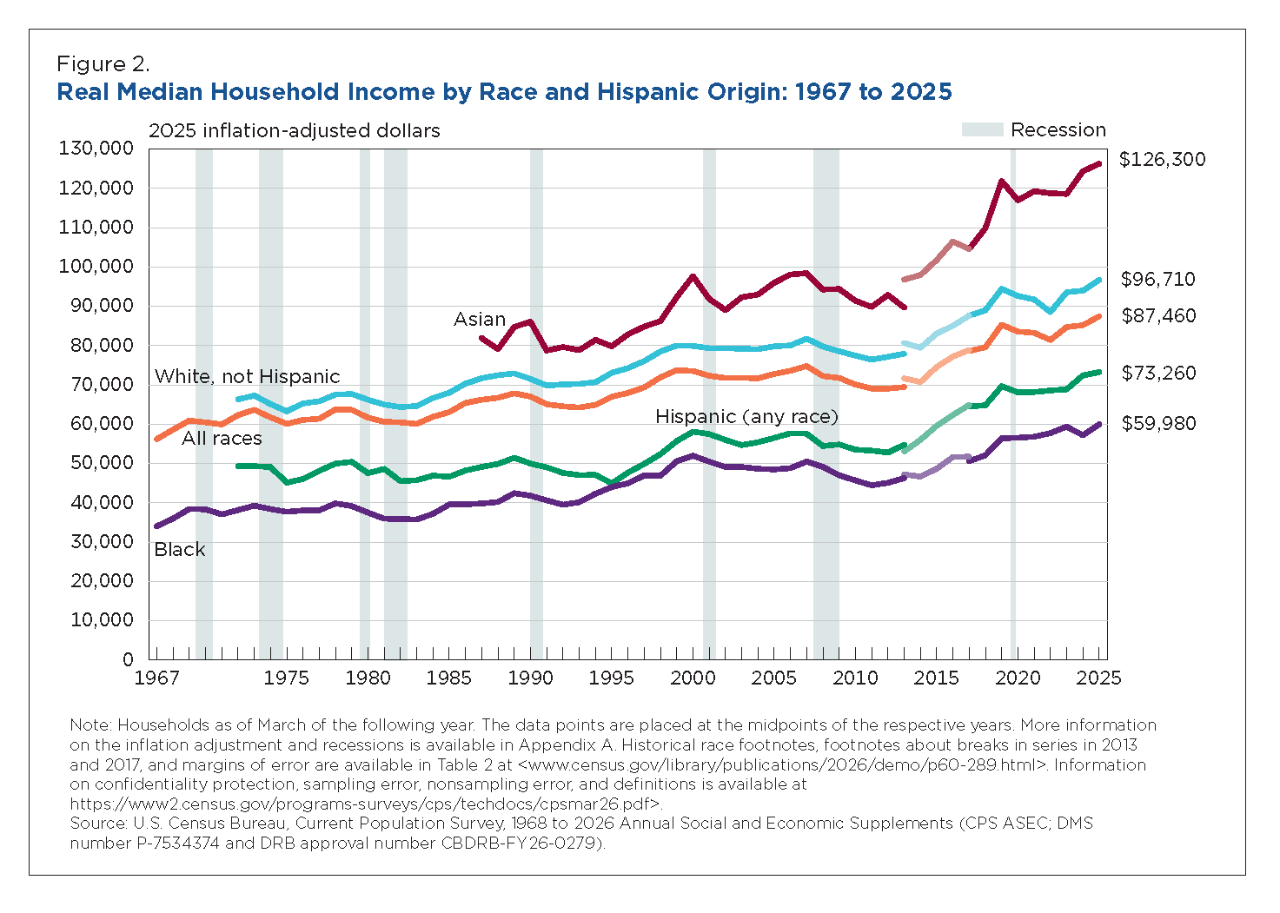
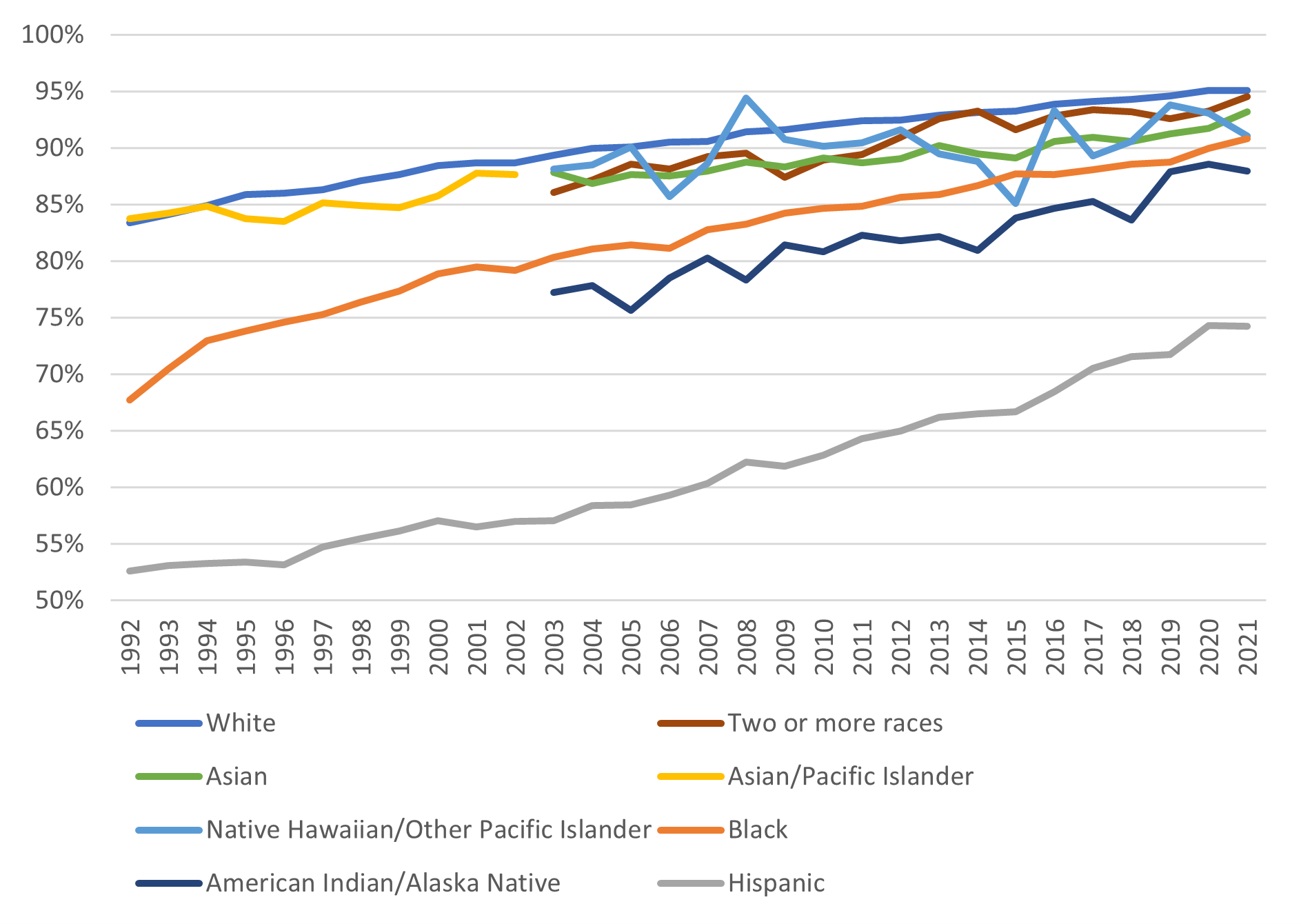
With this in mind, it might be easy to blame people of color for these outcomes. However, it is important to remember that, while people have free will and agency, it is all shaped by where in the world they are born, who they are born as, what abilities people are born with, the social structures surrounding them and what actions this society allows or inhibits, the history undergiding this society, and how that all overlaps in the everyday realities and lived experiences of the people that make up these statistics.
Intersectionality is a framework that allows us to pay attention to these histories, realities, and distinctions that are informed by the overlapping factors of one's identity. Due to existing in this society, people sometimes pick up on the normative thought patterns and structures that justify forms of ongoing inequality, leading to what scholars, activists, and professionals have termed "implicit bias".
What is Implicit Bias?
Implicit bias is the internal prejudice against groups, particularly of minority backgrounds, either due to enivronment or personal belief and physical experience. An example of implicit bias in the United States today is prejudice against Black Americans, where White American's have an above average rate of associating Black people with more negative connotations. It is an internal prejudice due to the harmful associations that lead to real world social interactions.
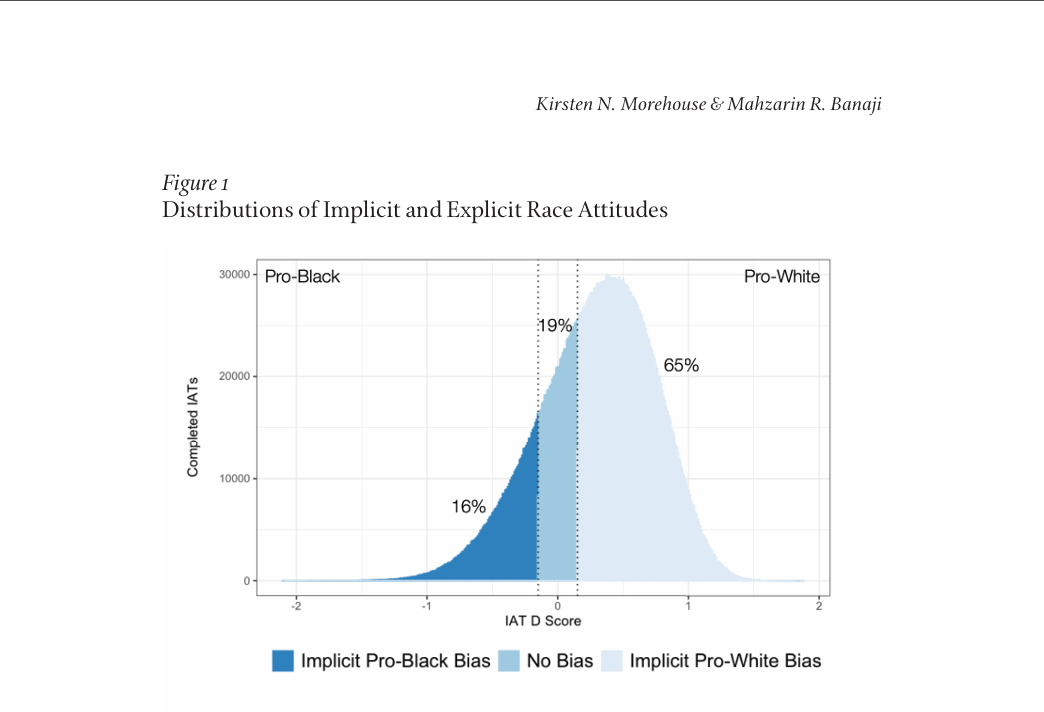
Implicit bias is not just a one time thing either as people from more privileged backgrounds take these biases with them and use that dominanace to discriminate against vulnerable groups. Another example for implicit bias like this is for Native Americans, who face daily microaggressions from these biases. Historically and currently, these biases have either been ignored as an issue or minimized due to societal pushback and for the benefit of more priviliged groups from losing social power and increasing minorirty influential recognition and power.
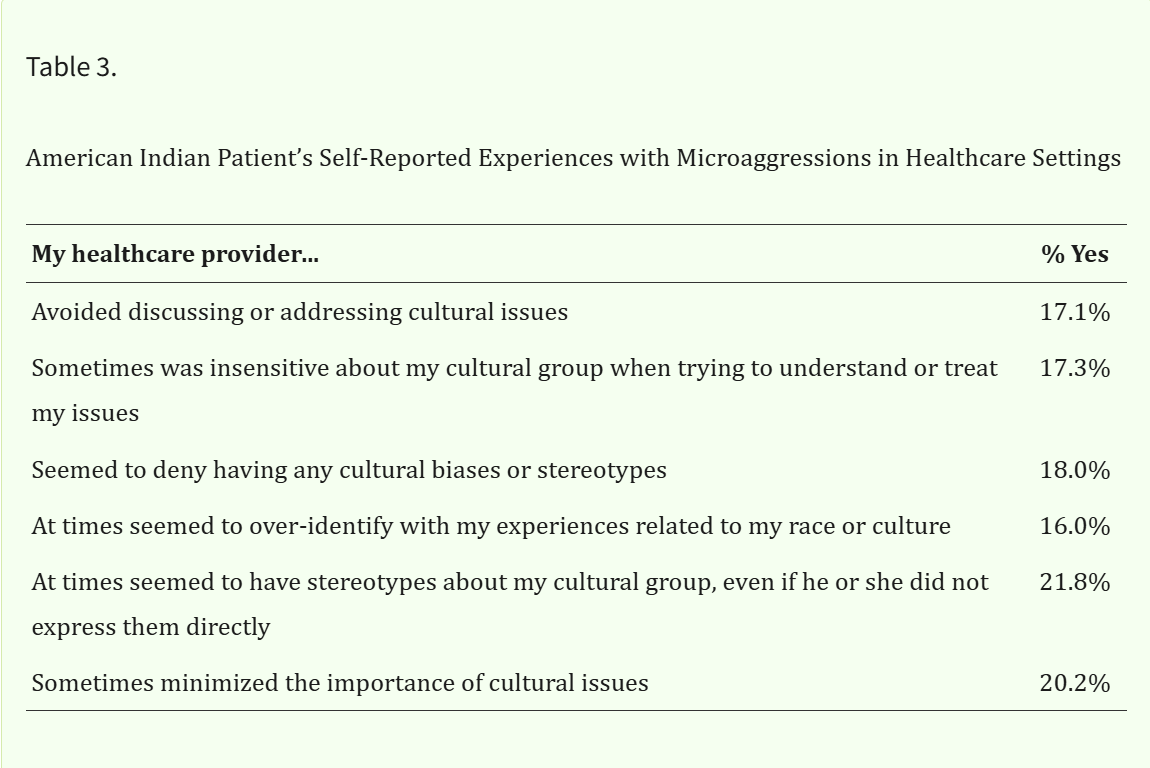
The chart shows that these microaggressions are in all corners of life and this cuts deep into motivation and to the denial of native americans suffering in the United States. This also goes for other underrepresented minority groups.
Watch the videos below to learn more about implicit bias and how it shows up in technology.
Intersectionality Bias Test
The implicit bias test allows people to understand how and why implicit bias may be creeping into their own way of viewing others in the world. Ideally, this test can help open your eyes to the implications of intersectionality. This test helps us understand how interactions between and amongst groups of people can cause discrimination, but also how these forms of discrimination can be mitigated or prevented.
The implicit bias test can be a good way to measure stereotypes. Stereotypes are like mental shortcuts that tend to over-generalize and group entire populations of people together based on perceived behavior.
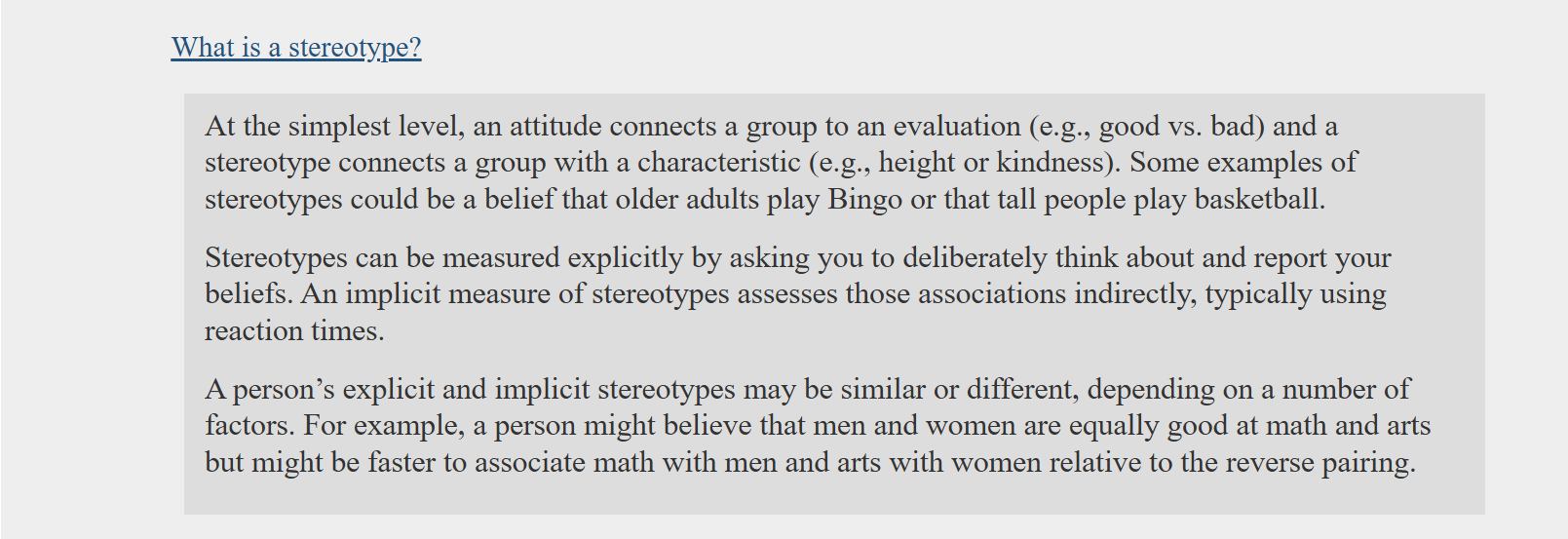
Stereotypes can technically be either positive, negative, or even neutral. It often begins very subtly. For example, believing that all women are "naturally caregiving" or that all Black people are good at sports. However, it can often grow more pernicious and dangerous, and has led to extreme forms of injustice and inequality, including within digital technologies. The implicit bias test is a helpful resource for starting to investigate these biases.
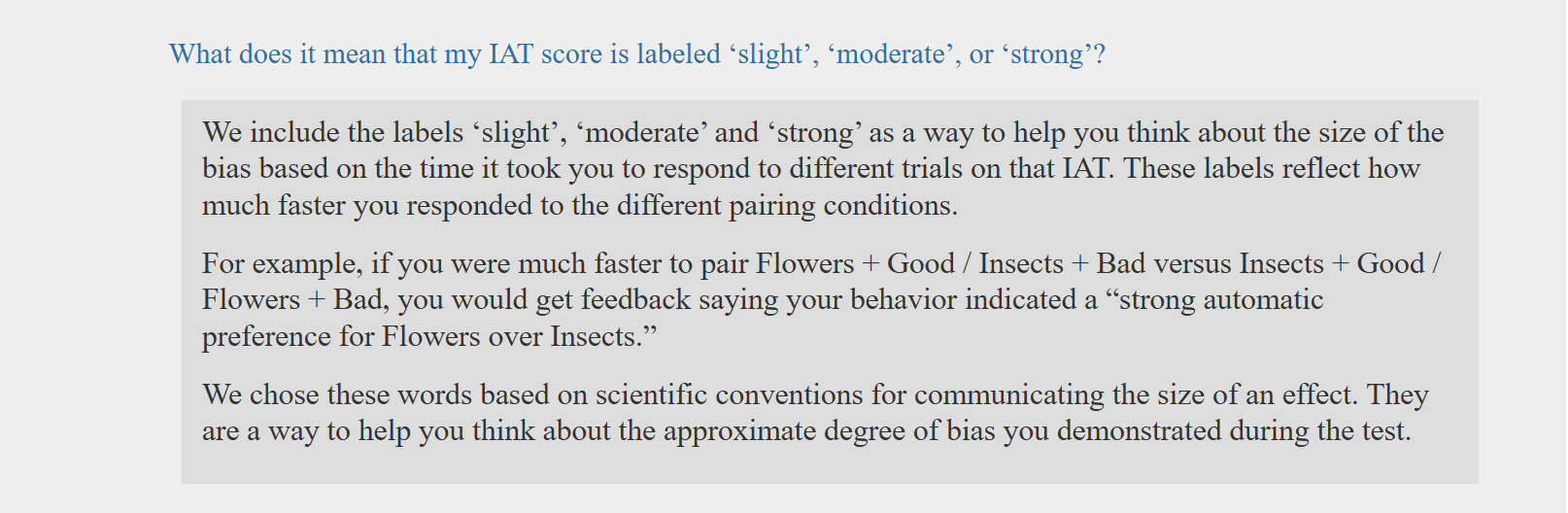
The implicit bias test measures the potential strength of bias in a tiered format, particularly based on the associations we make between images and words. The tiered structure helps us understand how we make snap second judgements and how this aligns with predominant conceptions within a wider population of people. Just because a larger part of the population is deemed "moderately discriminate" doesn't mean stereotypes are less harmful. It can mean that they are actually more hidden, casual, and part of the everyday experience, which is why the quick association test can be useful for piecing out these ingrained assumptions about groups of people.
While learning about intersectional and implicit bias are good first steps, it is important to apply this to our own lives and question how this may seep into our own social realities and practices.
If you haven't yet, we encourage you to take an implicit bias test, or at least learn more about it. Maybe this can help you more critically consider your own relationship to technology, and the sorts of people that you think are working to combat inequality and discrimination within tech, like our our tech heroes are.
Learn more about the implicit bias test or even take one here:
Additional Resources
Check out these additional resources if you are interested in learning more about systemic discrimination, implicit bias, and intersectionality: